

Design & Build Bristol: Every Successful Project Is Built Twice

When people think about a successful construction project, they usually picture the finished result. A beautiful extension filled with natural light, a thoughtfully designed kitchen, a loft conversion that transforms the way a family lives. What they don't see are the hundreds of decisions, conversations and plans that made those outcomes possible.
At Pathfinder Build, we often say that every successful project is built twice.
The first time is on paper.
The second time is on site.
The more thoroughly a project is planned before construction begins, the smoother the build is likely to be. That's why we believe the foundations of a successful project are laid long before the first excavation or structural alteration takes place.
Construction Is Only Part of the Project
It's easy to think of building work as simply the construction phase, but that's only one part of a much larger process. Every successful project depends on dozens of decisions being made in the right order.
What are we trying to achieve?
What does success look like?
Who is responsible for each decision?
What assumptions are we making?
What risks could affect the programme or budget?
How will changes be managed if they arise?

The same project management principles underpin everything from our home renovations to loft conversions, HMOs and residential developments. When these questions are answered early, construction becomes a coordinated process rather than a series of reactive decisions.
What "Design & Build Bristol" Really Means
Many people assume Design & Build simply means appointing one company to design and construct the project. While that's true, we believe the real value lies elsewhere.
A Design & Build Bristol approach allows the project to be planned as a whole rather than as separate pieces. Design decisions are informed by construction experience, the buildability is considered from day one. Potential issues are identified before they become expensive problems, and programme, procurement and construction sequencing are all developed alongside the design rather than after it. This creates a more joined-up process and gives clients a single team working towards a shared outcome.
Defining Success Before Work Begins
Every project starts with a conversation about what success actually looks like. For one family, success might mean creating enough space to avoid moving house. For another, it could be delivering a development on programme so that finance costs don't erode profitability. The definition changes, but the process doesn't, before construction begins, we work to establish:
The project objectives.
The key milestones.
Budget priorities.
Programme expectations.
Design responsibilities.
Critical decisions.
Potential project risks.

Taking the time to define these at the outset gives everyone a shared understanding of where the project is heading and how we'll get there.
Managing Risk Before It Becomes a Problem
One of the biggest differences between a well-managed project and a stressful one is how risks are handled. In construction, problems rarely appear without warning. More often than not, there are early signs that something needs attention.
Drawings don't quite align.
Information is missing.
A material has a long lead time.
A decision hasn't been made.
Ignoring these issues in the hope they'll resolve themselves is one of the quickest ways for programmes to slip and costs to increase. Instead, we believe in identifying risks early, discussing them openly and agreeing the best course of action before they affect the project.
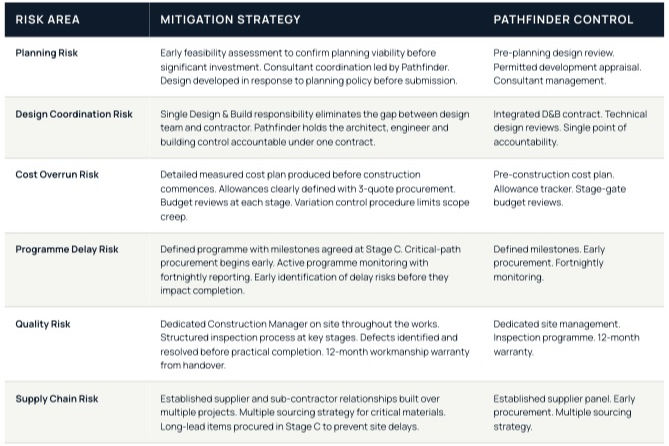
We've seen first-hand how a simple coordination meeting between designers can prevent weeks of delay later on. On one recent project, identifying a discrepancy between the architectural and structural drawings early allowed the design team to resolve the issue while procurement continued in parallel, protecting the programme and avoiding unnecessary disruption.
Communication Is Part of Project Management
Good communication isn't about sending more emails, it's about making sure the right people receive the right information at the right time. That's why we've invested in systems that help keep everyone informed throughout the project.

Clients, designers and consultants all have visibility of the information they need, including quotations, selections, variations, invoices, RFIs and project actions. Whether we're delivering a loft conversion or a full home renovation, everyone works from the same up-to-date project information.
More importantly, we don't expect clients to continually check for updates themselves. When decisions are needed, we communicate proactively so that nothing important is overlooked. It's a simple principle, but it keeps projects moving.
Planning for Change
No construction project is completely static; clients refine ideas, designs evolve, unexpected discoveries can occur once work begins. Change isn't the problem, poorly managed change is.
By reviewing progress regularly, maintaining clear records and keeping decisions visible, changes can be incorporated without losing control of the wider project. Our aim is to ensure that clients understand the impact of decisions before they are made, rather than after they've affected cost or programme.
The Value of Professional Project Management
Whether you're extending your family home or delivering a residential development, successful projects rely on more than quality workmanship. They rely on organisation, planning, communication, coordination, and a team that understands how each decision affects the wider project.
Construction will always involve complexity, but complexity doesn't have to create uncertainty. With the right planning and management, it becomes something that can be understood, communicated and controlled.
Good construction solves problems, great project management prevents them.
Why Pathfinder Build?
At Pathfinder Build, our background working alongside developers has shaped the way we deliver every project. We approach residential construction with the same discipline we'd apply to a commercial development: clear objectives, structured planning, proactive communication and careful risk management. Whether it's a loft conversion, home renovation, HMO conversion, or a new build, our focus remains the same...
The result is a calmer experience for our clients, projects that are better coordinated, fewer surprises, and a team that's focused not just on building well, but on managing the entire journey from concept to completion.

Because every successful project really is built twice; the first time on paper, the second time on site.


Comments